
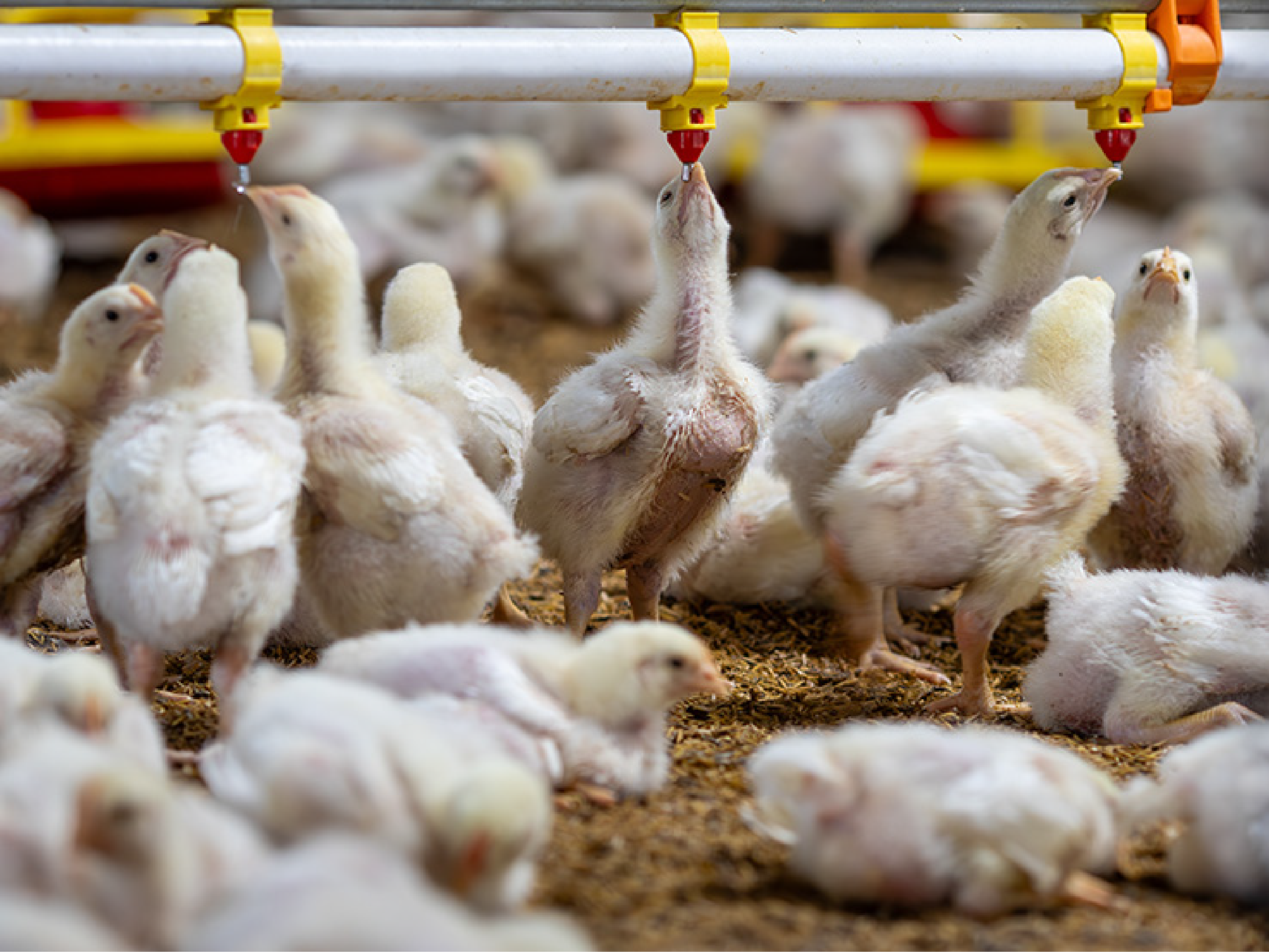
Broilers today drink more water than they did 10 to 20 years ago but problems can be avoided by ensuring the birds receive good quality water, monitoring daily water intake and implementing a sound water line cleaning and maintenance program, according to Professor Tom Tabler of Mississippi State University and co-authors in ‘MSU Cares’.
10 December 2014
By: Jackie Linden
Water is the most critical, but also the most overlooked, nutrient when it comes to flock performance in the poultry industry. A bird can survive for weeks without feed but only for a few days if water is not available. Water is essential for many functions within the body, such as moving feed through the digestive tract and carrying nutrients (vitamins, minerals, amino acids and so forth) throughout the body. Water is also needed for the many enzymatic and chemical reactions in the body, body temperature regulation, lubrication of joints and organs, and excretion of waste products from the body.
Most growers are more worried about the quantity and availability of the water they supply to their birds than they are about its quality. However, because of the variability in quality and the potential for contamination, water quality plays a major role in flock performance. Water quality has the potential to affect digestion and absorption of nutrients, as well as flock health. Because of its hydrogen bonding capabilities, water is a universal solvent and, as a result, may contain numerous dissolved minerals and other compounds.
It is also an ideal medium for the movement of harmful chemical elements and for the growth of microorganisms. Water intake in your birds is roughly twice the weight of feed intake. However, during periods of extreme heat stress, water intake may triple or even quadruple. Therefore, it is essential to have a safe and adequate water supply at all times in order to achieve efficient poultry production.
Water Quality
There are several different ways to characterise water quality, including taste, colour, odour, alkalinity, acidity, hardness, turbidity (cloudiness), pH, presence or absence of bacteria and so forth. These factors, in turn, can affect the health and performance of your flock. The composition of water will vary with the geological makeup of the region. Additionally, water quality can also change from season to season based on the water source and the environment surrounding that source, such as flooding, drought and farming practices, to name a few.
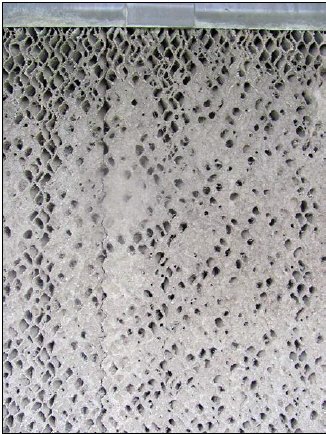
In addition, dissolved minerals in water can create issues with equipment. This can have detrimental effects on the growth rate of pullet and broiler flocks, and it can reduce reproduction and egg numbers in breeder flocks. Pressure regulators and water lines can become clogged with mineral deposits, restricting water flow to the birds. Cool cell pads can also become clogged (Figure 1), reducing air flow and decreasing the cooling capability of the ventilation system, which can put the flock at risk.
It is always best if drinking water is clear and has no odour, colour or taste although often, this is not the case. For example, water with high sulphur content has a rotten egg smell, water with high iron content has a reddish-brown colour, and water with high copper content has a blue colour. Iron or manganese sulphates can cause a bitter taste. In addition, high concentrations of sulphates can combine with magnesium to form Epsom salt or with sodium to cause a laxative effect, resulting in wet litter. High concentrations of sodium and chloride (salt) may increase water consumption and also result in wet litter. High salt levels in the water can lead to toxicity when combined with salt in the feed.
High levels or combinations of calcium, magnesium and sulphate can cause scale build-up in the water system. Nitrates in water may indicate bacterial contamination. Their presence is often a direct result of commercial chemical fertilisers or animal manures from surrounding fields seeping into the groundwater supply. So even if water appears clear, odourless, colourless and tasteless, it should not be assumed to be safe.
Contaminants in water are measured as milligrams per litre or parts per million (ppm). One ppm is equivalent to one gallon of salt dissolved in one million gallons of water and would yield water that contains 1ppm of salt. Even though ppm is a tiny amount, birds are provided a balanced diet through their feed, and any additional minerals provided in the water may be detrimental to their health and performance. Decreased weight gain, fewer eggs, poor feed conversion, and wet litter can be problems when high levels of minerals are present in water.
The pH tells you how acidic or alkaline the water source is. On the pH scale, 7 is considered neutral. Anything lower than pH7 is considered acidic and anything higher than pH7 is considered alkaline. A high pH is often characterised by high levels of calcium and magnesium, which can build up over time and clog the water system. Water that is highly alkaline may also cause poor feed conversion and reduced water and/or feed intake, along with possible diarrhoea and digestive upsets. The high mineral content can also cause scale build-up in water lines and drinkers, resulting in leaky nipples and a decrease in the effectiveness of chlorine or other sanitising agents you may be using to treat the water.
Calcium, magnesium, and sodium are the primary components of total dissolved solids (TDS), which is a measure of the inorganic salts dissolved in water. Water with a high level of dissolved minerals is often referred to as ‘hard’ water. Hardness measures the tendency of water to precipitate soap and form scale. Water ‘softeners’ reduce the hardness in water by replacing calcium and magnesium with sodium. However, chickens are very sensitive to excess sodium. Therefore, in most cases, it is not recommended to use water softeners on poultry water supplies. If you do so, monitor sodium levels on a regular basis to prevent sodium from reaching unacceptable levels. High levels of TDS may cause loose droppings and other harmful effects in poultry production.
In general, birds accept water on the acid side (pH less than 7) better than they do water on the basic (or alkaline) side (pH greater than 7). A pH in the range of 6.2 to 6.8 seems to work well for chickens. Acidification can lower the pH of the water and increase water quality, improving the health and performance of your flock. Many growers are aware of this and may purchase five per cent apple cider vinegar to lower the pH of their water supply. Vinegar is mainly acetic acid, which is a weak acid and much less dangerous to handle than stronger acids such as hydrochloric or sulphuric acid.
Weak acids can drop the pH of water slightly, and, in many cases, that is enough. However, if the initial pH is too high, something stronger than five per cent vinegar may be necessary. You may need to visit a chemical supply house to purchase a stronger vinegar solution or something stronger than vinegar. Acidification offers such benefits as these:
-
lowering the pH of the gastrointestinal tract. which reduces the growth of pathogenic organisms
-
improving chlorine availability
-
preventing scale build-up in drinker systems.
Would you feel safe drinking the same water your birds drink? Have you had your water tested, and do you know what is in it? If not, you should consider having a water sample analysed.
Barton (1996) recognised the importance of water quality to broiler and turkey performance and recommended growers have their water supply tested for mineral content and bacterial contamination. The true quality of well water is unknown unless laboratory tests are conducted to determine mineral levels and bacterial content (Figure 2).
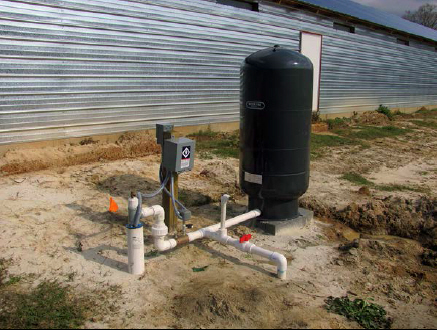
Extension Service personnel can help you with instructions, sample collection and interpretation of the results from an analysis. For example, the methods for collecting and shipping samples for mineral analysis and bacterial analysis are different. Bacterial samples should be kept cold (but not frozen) and shipped overnight to the lab. Mineral samples do not need to be kept cold and can be shipped less expensively by ground.
If sample results indicate a problem, be prepared to take steps to correct that problem. This could mean one or more of several water treatment options. Many growers have added a sand filter to their water system to compensate for water with a high mineral content. Acidification (mentioned previously) lowers the pH of the water supply. Chlorination is the most commonly used water treatment method for eliminating bacterial contamination.
Chlorine is the least expensive water sanitiser but other products such as hydrogen peroxide and chlorine dioxide are available and work well. Some growers with low pH water supplies will run hydrogen peroxide-based products (at eight ounces in five gallons of water) through the drinker lines with the medicator for 24 hours once a week while birds are in the house. Sanitisers and strong water line cleaners can be used between flocks to prevent build-up over time of rust, mineral deposits, algae and biofilms (communities of microorganisms that stick to each other).
Water Quantity
A safe supply of high-quality water is critical for good flock performance. However, just as important as water quality is water quantity and availability. A high-quality water supply can’t deliver its full potential if birds cannot access it. This is often a problem on older farms that may have added a cool cell system, increased the length of the existing cool cells, or built an additional house without upgrading the water supply capabilities.
Another common problem is inadequate pipe size of the supply line from the well to the chicken houses and perhaps the lines inside the house (Figures 3 to 5).
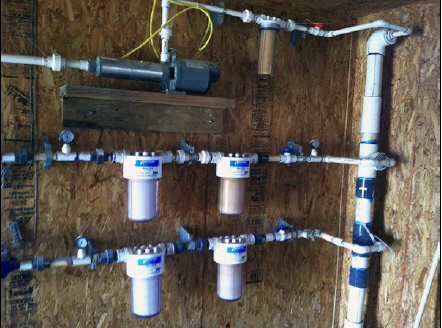
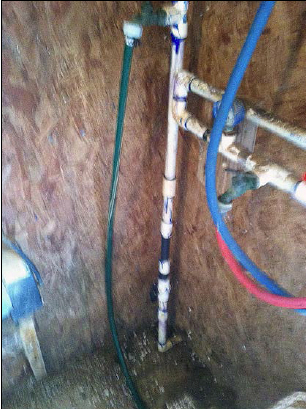
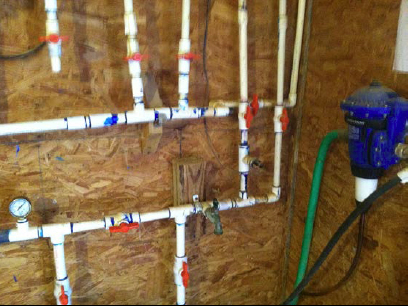
Also, if water demands are increased (additional cool cell capacity added, another house built, birds kept to heavier market weights requiring increased water demands, and so forth), keep in mind that the gallons per minute capacity of your well pump may no longer be adequate. If you increase the demands on your quantity requirements, you may need to drop a larger pump in the bottom of the well to handle the increased demands or, in some cases, add another well. You may also need to increase the size of your supply line from the well to the chicken houses to accommodate the increase in water demand. In addition, some growers have added on-farm water storage tanks to help supply water during the peak demand period of the day.
Modern broiler flocks have significantly increased their water intake over the last 20 years (Williams et al., 2013). Genetic advancements made over the years have improved weight gain, feed intake, and feed conversion ratios. However, we sometimes fail to consider how these advancements have affected water requirements and the water intake patterns of broilers.
Williams et al. (2013) compared average daily water consumption of broiler flocks reared in 2010–2011 with flocks reared 10 and 20 years ago (Table 1) and found that total water consumed per 1,000 birds over a 42-day period increased by 34.3 per cent (2,048 and 1,525 gallons per 1,000 birds, respectively).
| Table 1. Comparison of broiler water consumption for 1991, 2000-2001 and 2010-2011 (gallons per 1,000 birds) | |||
| Flocks grown in | |||
|---|---|---|---|
| Flock age (days) | 1991 | 2000-2001 | 2010-2011 |
| 1 | 0 | 0 | 0 |
| 2 | 2.25 | 3.16 | 5.85 |
| 3 | 4.96 | 5.56 | 7.81 |
| 4 | 6.23 | 8.06 | 11.10 |
| 5 | 6.87 | 9.97 | 13.39 |
| 6 | 8.15 | 11.60 | 15.30 |
| 7 | 10.75 | 13.17 | 17.67 |
| 8 | 10.87 | 15.41 | 21.03 |
| 9 | 13.02 | 17.70 | 22.57 |
| 10 | 15.10 | 19.91 | 24.88 |
| 11 | 16.89 | 21.48 | 27.73 |
| 12 | 17.00 | 23.70 | 28.96 |
| 13 | 21.05 | 25.29 | 32.23 |
| 14 | 21.88 | 27.55 | 34.80 |
| 15 | 24.61 | 29.63 | 35.96 |
| 16 | 24.89 | 31.50 | 38.17 |
| 17 | 27.39 | 32.97 | 40.55 |
| 18 | 28.98 | 34.66 | 42.87 |
| 19 | 29.21 | 36.49 | 45.99 |
| 20 | 31.89 | 38.29 | 47.90 |
| 21 | 36.03 | 40.27 | 50.22 |
| 22 | 39.65 | 41.36 | 52.21 |
| 23 | 39.37 | 43.39 | 53.65 |
| 24 | 41.80 | 46.31 | 56.77 |
| 25 | 41.96 | 49.01 | 58.94 |
| 26 | 44.00 | 50.67 | 60.28 |
| 27 | 47.56 | 52.28 | 61.46 |
| 28 | 49.02 | 54.41 | 63.51 |
| 29 | 48.34 | 57.30 | 66.16 |
| 30 | 52.29 | 56.97 | 70.59 |
| 31 | 55.92 | 61.16 | 70.73 |
| 32 | 58.47 | 65.25 | 72.10 |
| 33 | 56.77 | 64.10 | 75.17 |
| 34 | 61.63 | 67.07 | 73.31 |
| 35 | 62.08 | 69.14 | 75.79 |
| 36 | 63.90 | 70.97 | 75.64 |
| 37 | 62.99 | 73.05 | 80.38 |
| 38 | 63.79 | 74.70 | 82.77 |
| 39 | 66.83 | 77.87 | 82.91 |
| 40 | 67.04 | 77.75 | 82.47 |
| 41 | 71.85 | 78.18 | 84.44 |
| 42 | 71.72 | 80.14 | 84.34 |
| Adapted from Williams et al. (2013) | |||