
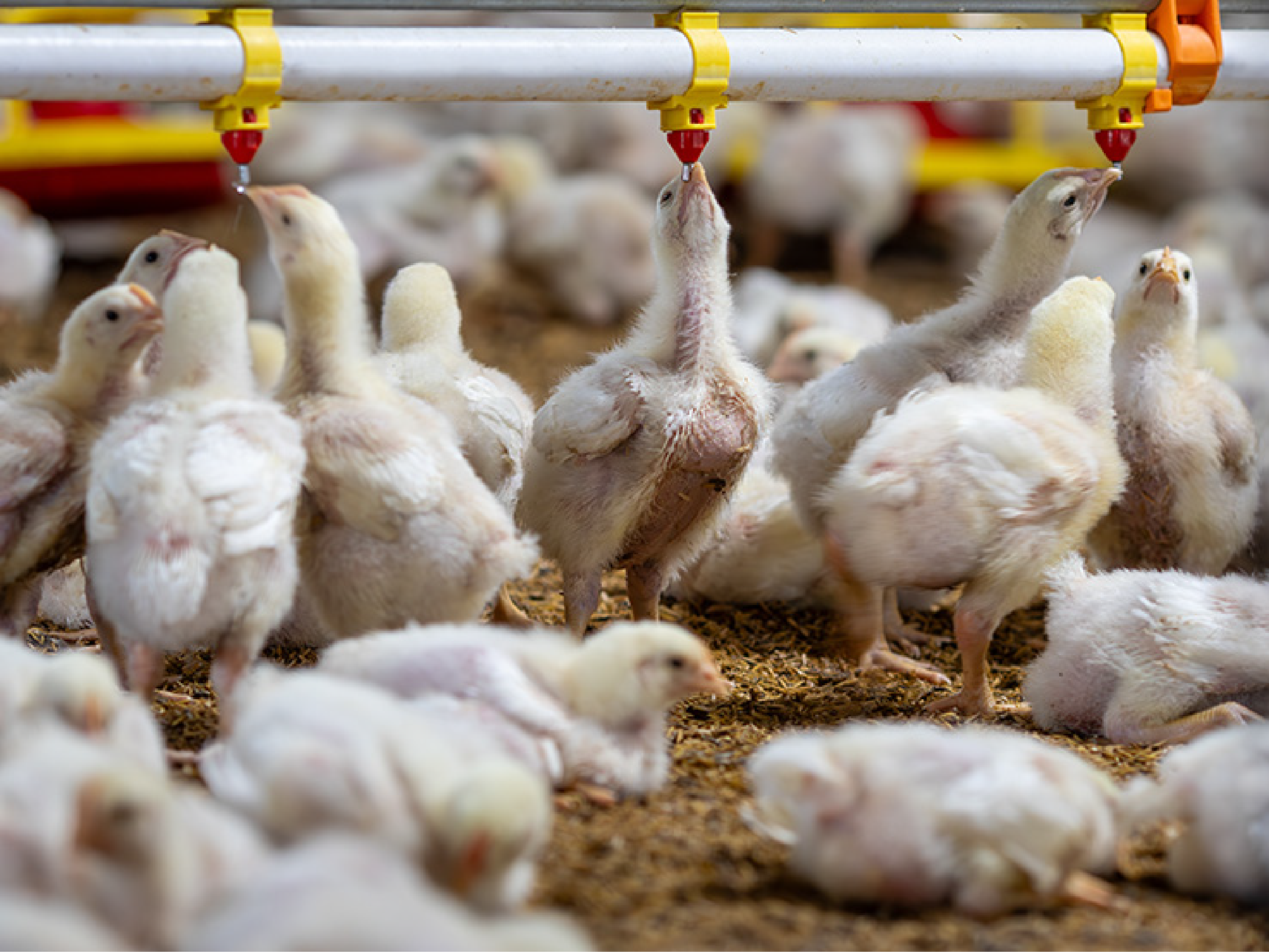
How Important Is Water Quality?
-
Water Quality is essential to animal health and performance. At the point when growers receive a new batch of chickens, it is vital that these new chicks get off to a good start in order to make it through the grow out process. Good water quality is key to producing more healthy birds and establishing a successful poultry business.
-
Water Quality is important when maintaining equipment. Maintaining equipment can be a major cost factor in poultry production. Poor water quality results in negative impacts on vital equipment in broiler houses. Thus, adding additional cost for repairs or equipment replacement.
How Can Water Quality Management Be Used to Improve Better Animal Health And Maintain Equipment Longevity?
There are several areas to consider when addressing overall water quality management. Listed below points out 3 main “Areas To Control” (ATC) to achieve best results.
-
Controlling Bacteria and Microorganism Growth
-
Controlling Proper PH Levels (This is vital to achieve #1)
-
Controlling Solids and Mineral Fallout
In order to effectively address the ATC’S we must first determine the water quality of your water source. This will require a test of your water source to determine what steps will need to be taken to effectively manage the ATC’s. Testing for Bacteria, Viruses and Microorganisms will require the use a Lab to perform certified testing results. Testing PH levels and certain minerals can be done through testing devices acquired and used routinely by the grower to save cost.
Once you know the test results of your water source let’s dive deeper into how to achieve the ATC’s.
Controlling Bacteria and Microorganism Growth
This can be managed through a chlorination or sanitation process. Water disinfection during production plays an integral role in Water Quality Management. Controlling bacterial contamination in the drinking system is key to reducing bird exposure to harmful organisms and reduces the spread of disease. Chlorination can be established by injecting small amounts of Sodium hypochlorite (NaClO), also known as liquid/household bleach (10-12 percent chlorine content) into the water system. Chlorination also provides residual protection against recontamination. It is easy to use and cost effective. When utilizing Chlorination, it is recommended to maintain residual levels between 3-5 ppm parts per million to ensure proper protection. A Chlorine tester can be utilized by the grower and should be tested at the farthest point away from the injection point to ensure residual protection is available.
Controlling Proper PH Levels
Maintaining proper pH Levels is one of the most essential components to establishing a successful Water Quality Management program. First to be noted… the effectiveness of chlorination/sanitation greatly depends on the pH level of your water. For best results, levels should be between 6 – 6.8. After testing the water’s pH level, an acidifier may need to be added to ensure that the pH is within the recommended range. A pH of 7 is considered neutral and a pH higher than 7 is considered alkaline which greatly reduces the effectiveness of the sanitation process.
Better overall bird performance will be achieved drinking acidic water rather than alkaline.
Adding Diactagen (Acidifier) to the water not only provides benefits to the sanitation process but also provides a direct benefit to the birds as Diactagen controls the pH levels within the bird’s gut. Establishing a buffer of protection against harmful pathogens that can be acquired, plus establishes better feed assimilation. Utilizing Diactagen birds respond better during times of Heat Stress and desire to drink and eat more. Utilizing Diactagen has proven not only to be a great solution to manage pH levels, but produces better overall morality, resulting in stronger, healthier birds by grow out time.
Controlling Solids and Mineral Fallout
In most cases collecting solids can be managed through proper filtration systems and should be setup ahead of most additional injection points where solution injector systems such as proportioners or medicators are used to inject solutions into the lines.
There is one exception to this rule. If it is determined that the water source contains harsh minerals such as calcium, manganese and iron which overtime can fall out causing build up in water lines and nipple drinkers, creates problems for the birds to receive an adequate water supply. This will require establishing a program to control Mineral fallout.
The best approach to address this issue is to utilize a product that keeps those minerals in sequester and prevents mineral fall out. Klear-Flo is that product. Klear-Flo is a product widely used by the poultry industry as well as municipalities to control issues from mineral build up, thus keeping lines clean and maintenance cost down. When this product is in use it is recommended that Klear-Flo be injected into the water lines ahead of the filtration system. This will assist in preventing mineral build up in the filtration system, adding additional longevity and allow the filtration system to work more effectively.
Understanding that not every water source is the same. By focusing on these 3 basic ATC’s, along with applying the additional products when needed to aid in these controls, can enable you to achieve a Successful Water Quality Management Program.
Providing better-quality water… Produces a better-quality bird.